


From This Month In 1992: The Mabo Decision — Changing Australia’s History
C.O.O.L.™ Time Capsule: This Month in History — June
Written by: Tamba Humphrey
Who Are the Aboriginal and Torres Strait Islander Peoples?
Aboriginal and Torres Strait Islander peoples are the First Peoples of Australia. Aboriginal peoples lived across mainland Australia and Tasmania, while Torres Strait Islander peoples lived on islands between Australia and Papua New Guinea. These groups developed hundreds of languages, cultures, traditions, and ways of life over tens of thousands of years. Indigenous communities had strong systems of law, trade, storytelling, and family life long before Europeans arrived. Their cultures are among the oldest continuing cultures in the world.

Map of Australia (Image credit: mapchart.net)
The land was deeply important to Aboriginal and Torres Strait Islander peoples because it connected them to their ancestors, spirituality, and identity. Indigenous communities cared for the environment by hunting responsibly, protecting water sources, and using controlled burning to prevent large wildfires. Knowledge about the land was passed down from generation to generation through stories, ceremonies, and daily life. People understood the seasons, animals, and plants in ways that helped the environment stay healthy and balanced. Indigenous peoples viewed themselves as caretakers of the land and believed they had a responsibility to protect it for future generations.
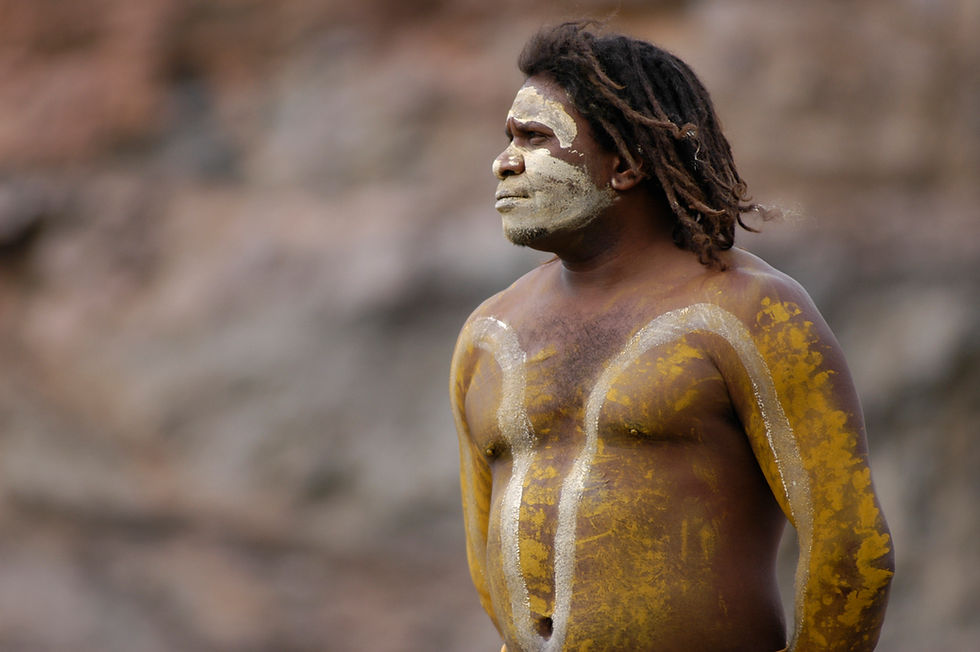
Aboriginal Man in Australia (Image credit: PTW on iStock)
The Meaning of Terra Nullius
When the British arrived in Australia in 1788, they claimed the land for Britain without asking Indigenous peoples for permission. The British government used the idea of terra nullius, which means “land belonging to no one.” This idea wrongly claimed that nobody owned or governed Australia before colonization. Indigenous peoples had already lived on and cared for the land for more than 60,000 years. Terra nullius ignored Indigenous cultures, laws, and connections to the land and became the basis for many unfair policies.
Challenging Australian Law
Eddie Mabo was a Torres Strait Islander man born on Mer Island in the Torres Strait. He grew up learning the traditions and customs of his people and understood their strong connection to the land. As an adult, he discovered that Australian law did not legally recognize his people’s ownership of their traditional lands. Eddie Mabo believed this was unfair because his community had lived on and cared for the land for generations. He decided to challenge Australian law and fight for recognition of Indigenous land rights.

Eddie Mabo, 1936-1992 (Image credit: By State of New South Wales, Department of Education and Communities and Charles Sturt University - Original publication: NSW HSC OnlineImmediate source: http://hsc.csu.edu.au/ab_studies/rights/global/social_justice_global/sjwelcome.response.front.htm, Fair use, https://en.wikipedia.org/w/index.php?curid=38839198)
In 1982, Eddie Mabo and other Torres Strait Islander leaders brought a court case against the government of Queensland. They argued that their people had always owned and cared for their traditional lands according to their customs and traditions. The case lasted for ten years and involved evidence from historians, lawyers, and Indigenous elders. The legal challenge questioned the fairness of terra nullius and whether Indigenous land rights should finally be recognized. Sadly, Eddie Mabo died before the case ended, but his efforts helped change Australian history forever.
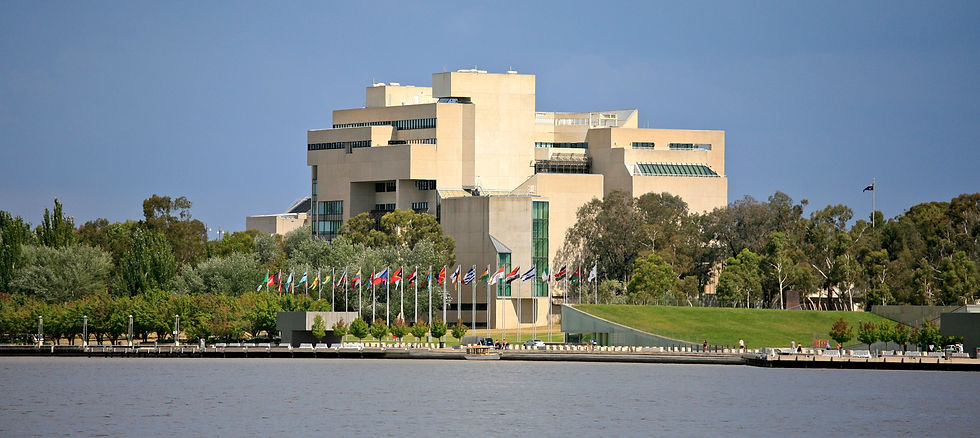
High Court of Australia (Image credit: By Alex Proimos from Sydney, Australia - High Court of Australia, CC BY 2.0, https://commons.wikimedia.org/w/index.php?curid=25649423)
The Historic Mabo Decision
In 1992, the High Court of Australia announced its decision in the Mabo Decision case. The court ruled that terra nullius was false because Indigenous peoples had lived on and governed the land long before British colonization. The judges recognized that Indigenous peoples still had ongoing connections to their traditional lands. This recognition became known as native title, which allows Indigenous groups to claim legal rights to certain lands. The ruling officially recognized Indigenous Australians as the original custodians of the land.
The Mabo decision changed Australian law and forced many people to rethink the country’s history. It led to the Native Title Act of 1993, which created a legal process for Indigenous communities to make land claims. The case showed that governments and laws can change over time to correct historical injustices. It also encouraged Australians to learn more about Indigenous cultures, histories, and contributions. Many people saw the decision as an important step toward fairness, respect, and reconciliation.
Why the Mabo Decision Still Matters Today
The Mabo decision remains one of the most important events in Australian history. It helped correct the false idea that Australia had belonged to no one before British settlement. The case recognized the rights and voices of Aboriginal and Torres Strait Islander peoples after many years of unfair treatment. It also started important conversations about identity, equality, and how Australia should remember its past. Today, the legacy of Eddie Mabo continues to inspire people working for justice and Indigenous rights around the world.
References:
National Museum of Australia. (n.d.). Mabo decision. National Museum of Australia. https://www.nma.gov.au/defining-moments/resources/mabo-decision
National Archives of Australia. (n.d.). Eddie Koiki Mabo and the Mabo case. National Archives of Australia. https://www.naa.gov.au/explore-collection/first-australians/eddie-koiki-mabo-and-mabo-case
Parliament of Australia. (n.d.). The Mabo decision. Parliament of Australia. https://www.aph.gov.au/Visit_Parliament/Art/Stories/The_Mabo_decision


Comments